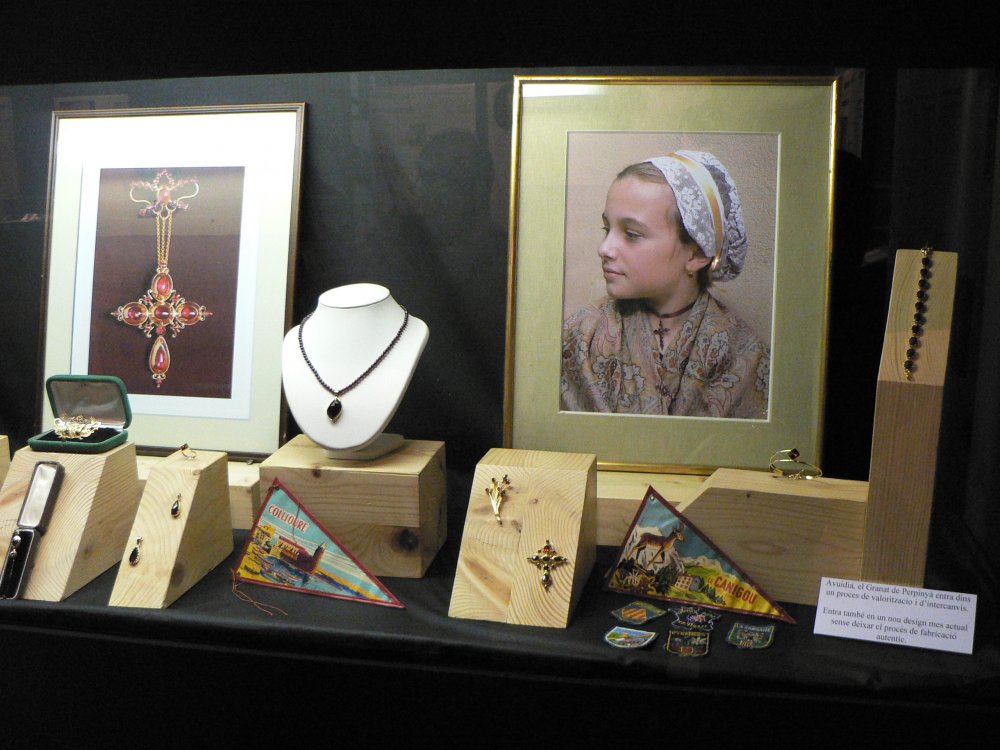
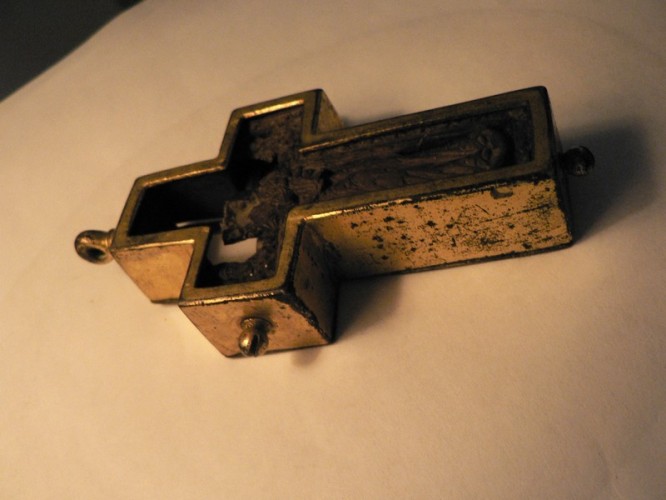
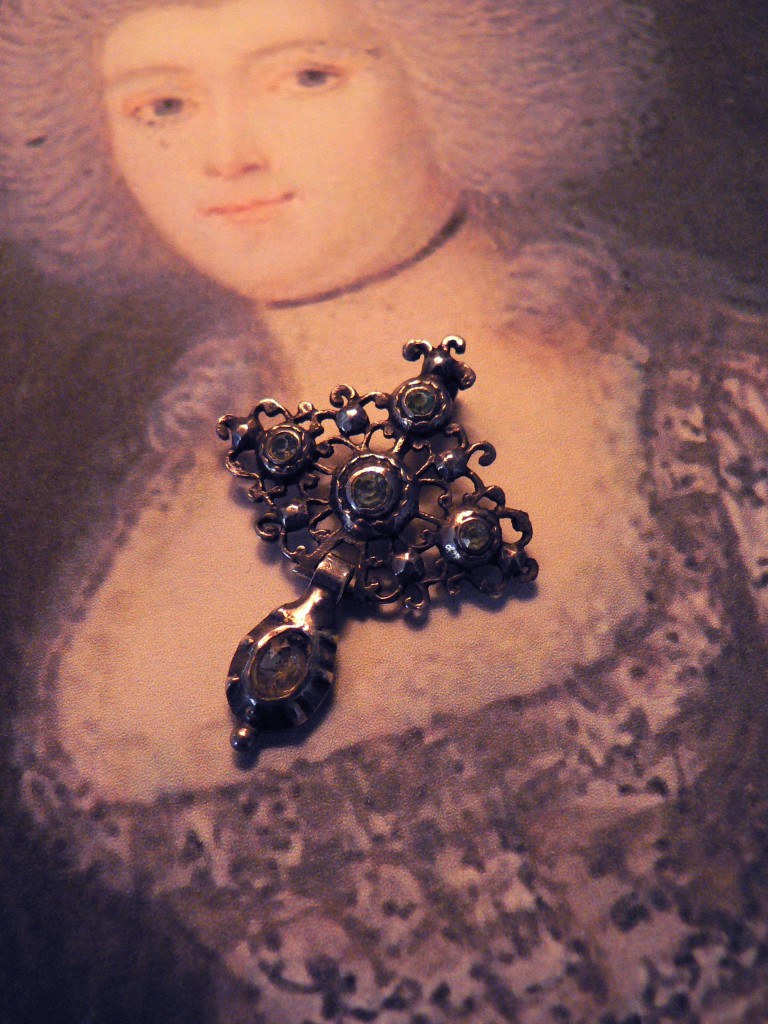
Das Erbe des Adels Im zweiten Kaiserreich ((1852 – 1870) entsteht ein neues Interesse am 18. Jhdt. Es entwickelt sich ein Kunsthandwerk im Stile der Pompadour. Die Kaiserin Eugénie, die von der Persönlichkeit der Marie-Antoinette eingenommen war, begründete einen Trend, der grossen Einfluss auf die Schmuckherstellung gewann. Im Roussillon wird so ein kostbares und imposantes Kreuz an den aktuellen Zeitgeschmack angepasst. Dieses Kreuz wurde Badine-Kreuz genannt. Der Name entstand durch … Continuer la lecture
Regionalism Since the last years of the 19th century, regionalism has played a large role in artistic creativity in Roussillon, a period of prosperity worthy of the Belle Epoque, during which time there was no desire to lose the connection with the roots of Catalan art. The garnet becomes central to a carefully orchestrated debate between the concepts of progress and tradition, and has become an emblem of “Catalan identity”, … Continuer la lecture
The Garnet in all its forms One of the most audacious creations in Catalan jewellery at the end of the 19th century was to totally abandon the mounting of other stones in favour of the garnet, with its subtle compositions, in advance of its time. Through their mastery and a perfect adaptation to the market, the jewellers at the end of the Second Empire were able to breathe a … Continuer la lecture
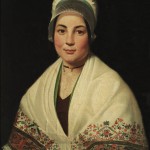
Jewelry symbolizes strong feelings: love, friendship, remembrance of a loved one. But in a region of two cultures sometimes Hispanic, sometimes French, whose relationships were always changing, the traditional craft was preserved. These precious objects always have always played a part in the culture of presentation of the Catalan population, proud of its heritage, from one generation to the next. In the first half of the 19th century, with the … Continuer la lecture
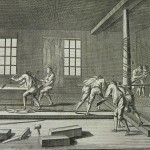
Turning gold into wire In Perpignan gold is exclusively used for Garnet jewelry. Mined industrially near the village of Glorianes (Pyrénnées-Orientales) from the 1920s to the 1960s, Catalan gold has been used since time immemorial. Processed and worked into fine sheets or wire of different thicknesses, gold is first passed through a manual or an electric machine to refine the metal. In the nineteenth century Catalan jewellers were specialized in … Continuer la lecture
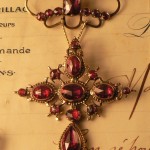
The legacy of the nobility In the Second Empire a new interest about the 18th century gave birth to the decoratives arts in the Pompadour style. Promoted by the Empress Eugénie, attracted by the personality of Marie Antoinette, this trend was to have a great influence on the jewelry culture. Roussillon contributed to the trends of the day in the form of a prestigious and imposing cross called the badine … Continuer la lecture
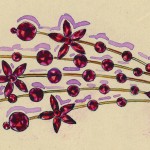
L’Art Nouveau européen ou l’affirmation des provinces Les vingt dernières années du XIXe s. sont un tournant dans l’art de la bijouterie par l’apparition d’un style touchant tous les domaines des arts décoratifs et liant les pays européens. Toutefois l’Art nouveau possède dans chaque pays ou microrégion des caractéristiques bien précises. Ses débuts sont fortement liés aux idées régionalistes. Chaque capitale régionale où provinciale voulait jouer un rôle centralisateur et contribua … Continuer la lecture
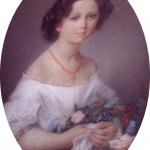
Très beau pastel ovale représentant une jeune fille avec un collier de corail. Le corail a été extrèmement recherché sur les cotes catalanes pour la fabrication de ce type de bijoux. Pastel, autour de 1850. lieu de conservation: mairie de Arles sur Tech.
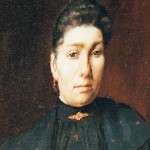
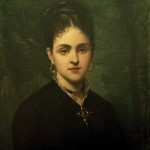
portrait anonyme représentant une femme portant des créoles et une broche en grenats de Perpignan. Huile sur toile apparue sur le marché de l’art à Perpignan, localisation inconnue.
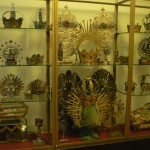
Au cours des siècles la tradition d’offrir un bijou à l’occasion d’un vœu exaucé s’est perpétuée en Roussillon sans interruption jusqu’au XXe siècle. La ferveur entourant la Vierge et certains saints ont ainsi permis d’accumuler de véritables trésors de médailles, chapelets et ex-voto corporels (yeux, mains, seins…) mais aussi de bijoux civils qui ornaient les statues à l’identique des personnes. Pourtant la disparition de ces bijoux fût progressive. L’usage qui … Continuer la lecture

L'Institut du Grenat est une association sous le patronage de l'Union européenne
(LEO04 Leonardo partnerships)
La région Occitanie aide l'Institut du Grenat dans le cadre de l'Inventaire patrimonial.

Convention-cadre de partenariat pour l'exposition "Art et histoire d'un bijou catalan" au palais des rois de Majorque.
Convention quadripartite pour la Saint Eloi 2023-2025.

Rejoindre l'Institut du Grenat, c'est rejoindre une association culturelle dynamique qui œuvre à la protection et au rayonnement du savoir-faire des bijoutiers traditionnels catalans en Grenat taille Perpignan.